The Final Call |
National News
Baldwin’s ‘Fire Next Time’ and dinner with the Hon. Elijah Muhammad
By Jehron Muhammad | Last updated: Mar 25, 2019 - 10:09:05 AMWhat's your opinion on this article?
|
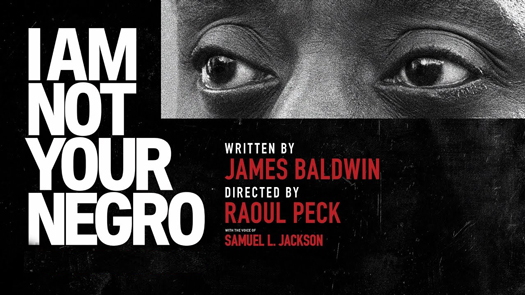
Novelist, playwright and activist James Baldwin has reemerged on the American landscape and been introduced to a new audience. The 2016 documentary “I Am Not Your Negro,” which one headline summed up as “James Baldwin Meets #BlackLivesMatter” and the acclaimed 2018 film adapted from his novel of the same name as the film, “If Beale Street Could Talk,” highlight Baldwin’s ability to speak to the essence of Black love, pain and suffering like no other.
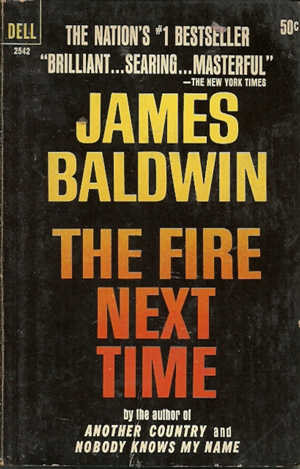
But, in his history making 1963 book, “The Fire Next Time,” which gave “passionate voice to the emerging civil rights movement,” there is a homage to a dinner meeting that Baldwin had with the leader of the Nation of Islam, the Honorable Elijah Muhammad. They talk about Baldwin’s life history, including preaching Christianity, his continued growth and reflections afterward where Baldwin discusses his take on the issue of “separation,” which was brought up at Mr. Muhammad’s dinner table.
Part of his reflection included: “... Elijah … was saying that no people in history had ever been respected who had not owned their land. And the (people at the) table saying, ‘Yes, that’s right.’ I could not deny the truth of this statement.” Baldwin later commented: “... what may now seem to be a fantasy, although, in an age so fantastical, I would hesitate to say precisely what a fantasy is.” He goes on to discuss what Black separation in a nation of our own could possibly look like.
|
Baldwin, who Mr. Muhammad had been viewing from afar, thus the dinner invite, was intrigued with Mr. Muhammad. Before they sat down for dinner, Mr. Muhammad said, “I’ve got a lot to say to you, but we’ll wait until we sit down.” Baldwin responded with a chuckle, writing, “He made me think of my father and me as we might have been if we had been friends.”
That statement points to Baldwin’s conflict filled relationship with his father. Baldwin mentions using his membership in a church other than his father’s as “a way to best my father on his own ground.” He writes that he pushed the advantage he attained, the result of becoming a preacher, “a Young Minister” as “the most effective means I had found of breaking his hold over me.”
After the dinner meeting, while they waited together for his ride, Baldwin wrote how “very strange to stand with Elijah for those few moments, facing those vivid, violent, so problematical streets. I felt very close to him, and really wished to be able to love and honor him as a witness, an ally, and a father. I felt that I knew something of his pain and his fury, and, yes, even his beauty. Yet precisely because of the reality and the nature of those streets—because of what he conceived as his responsibility and what I took to be mine—we would always be strangers … .”
Baldwin suggested the dinner meeting was possibly part of his attempts, public and private, “to explain how the Black Muslims (NOI) movement came about, and how it has achieved such force, was met with a blankness that revealed the little connection that the liberals’ attitudes have with their perceptions or their lives, or even their knowledge revealed, in fact, that they could deal with the Negro as a symbol or victim but had no sense of him as a man.”
One thing he may have taken away from the dinner table and a subsequent debate Baldwin had in 1963 with Mr. Muhammad’s national spokesperson, Minister Malcolm X, was a clearer view of how White America views Black America.
During Baldwin’s NOI reflections he looks to see into what White America actually sees when viewing the Black experience: “… when the country speaks of a ‘new’ Negro, which it has been doing every hour on the hour for decades, it is not really referring to a change in the Negro, which, in any case, it is quite incapable of assessing, but only to a new difficulty in keeping him in his place, to the fact that it encounters him (again! again!) barring yet another door to its spiritual and social ease.”
The Fire Next Times’ author’s NOI journey begins with “A White man’s Heaven is a Black man’s Hell,” Baldwin writes, “by a Black Muslim minister.” It was actually written and sung by a very young Louis X (aka Min. Louis Farrakhan). The book ends with Baldwin pondering over the dinner table and wondering: “When I sat at Elijah’s table and watched the baby, the women, and the men, and we talked about God’s—or Allah’s—vengeance, I wondered, when that vengeance was achieved, what will happen to all the beauty then?”
His conclusion was if “conscious” Whites and Blacks are not heeded a cataclysm can be expected: “If we do not now dare everything, the fulfillment of that prophecy, re-created from the Bible in song by a slave, is upon us: ‘God gave Noah the rainbow sign, No more water, the fire next time!’ ”
Follow @jehronmuhammad on Twitter.

News Search
Loading
Follow The FinalCall.com Networks



Join The FinalCall.com e-List


 Click Here Stay Connected!


For Email Marketing you can trust
Farrakhan Articles
- Unmasking Mr. Dershowitz
- Activists charge environmental poisoning and ‘silent homicide’ in San Francisco
- President spews more incendiary rhetoric as election draws closer
- Covid-19 and the divine chastisement of Florida
- The National Guard was deployed in Atlanta, what does this mean as shootings, violence plague other American cities?
- Our babies are dying, where are our friends?
- Hurling truth at Falsehood Nation of Islam responds to lies of Atty. Alan Dershowitz
- The impact of a universal message
- Police traffic stops in nation’s capital disproportionately target Blacks
- A Call to Action’ to address Covid-19 in Black Chicago
INSIDE STORIES AND REVIEWS
-

-

About Harriett ... and the Negro Hollywood Road Show
By Rabiah Muhammad, Guest Columnist » Full Story -

Skepticism greets Jay-Z, NFL talk of inspiring change
By Bryan 18X Crawford and Richard B. Muhammad The Final Call Newspaper @TheFinalCall » Full Story -

The painful problem of Black girls and suicide
By Charlene Muhammad -National Correspondent- » Full Story -

-

-

-

Exploitation of Innocence - Report: Perceptions, policies hurting Black girls
By Charlene Muhammad -National Correspondent- » Full Story -

Big Ballin: Big ideas fuel a father’s Big Baller Brand and brash business sense
By Bryan Crawford -Contributing Writer- » Full Story -
