| FCN
07/30/2002 The Queen's Scene |
 |

Achieving excellence with no limits
LL Cool J talks about family, R. Kelly, hip hop and reaching the unreachable
by Michelle Muhammad
Since first exclaiming "I Need A Beat" to the world in 1984, LL
Cool J has gone from being Def Jam�s very first artist to being an entertainer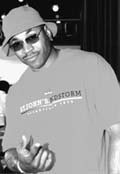 who has succeeded in crossing all mediums of entertainment. This talented actor,
two-time Grammy Award winner, and NAACP Image Award Winner, continues to display
his wide range of talents. LL is the first rap artist to amass six consecutive
multi-platinum plus selling albums and six gold singles. He has been seen in a
myriad of hit movies, including Halloween H2O, Rollerball and Deep Blue Sea. In
1997, he penned his autobiography I Make My Own Rules and later launched the
record label Rock The Bells. While in Chicago on the first leg of a grueling
40-city tour to promote his soon-to-be-released 10th album, he granted The Final
Call an exclusive, no holds barred interview, prior to his show at Chicago�s
House of Blues. Uncle L, as he is affectionately called by hip hop heads around
the world, discussed his career, spirituality, the importance of family, the R.
Kelly sex tape scandal, the direction of hip hop and reaching the unreachable.
who has succeeded in crossing all mediums of entertainment. This talented actor,
two-time Grammy Award winner, and NAACP Image Award Winner, continues to display
his wide range of talents. LL is the first rap artist to amass six consecutive
multi-platinum plus selling albums and six gold singles. He has been seen in a
myriad of hit movies, including Halloween H2O, Rollerball and Deep Blue Sea. In
1997, he penned his autobiography I Make My Own Rules and later launched the
record label Rock The Bells. While in Chicago on the first leg of a grueling
40-city tour to promote his soon-to-be-released 10th album, he granted The Final
Call an exclusive, no holds barred interview, prior to his show at Chicago�s
House of Blues. Uncle L, as he is affectionately called by hip hop heads around
the world, discussed his career, spirituality, the importance of family, the R.
Kelly sex tape scandal, the direction of hip hop and reaching the unreachable.
Final Call (FC): How did you get started in the music business?
LL Cool J (LL): Entertainment in general, I got started, wow, basically at nine. I became a fan of music and movies, too. I used to rap and I had a friend named Sean and we used to make movies (karate) in the backyard and play them backwards on a super 8 camera. By the time I was twelve years old, I got more and more involved with the music and started writing my own songs. Around age 14, I decided that I wanted to make a record, so I started striving everyday trying to figure out how to get in the door, how to get in the industry. When I was 16, I finally got my break. This guy named Rick Rubin took me under his wing and we made a demo and played it for Russell Simmons. Russell heard it and we ended up making some more demos and eventually they formed a record label called Def Jam.
FC: Over the years, we have seen your acting career flourish with your roles in such movies as In Too Deep, Any Given Sunday, Toys and Kingdom Come. We even saw you in your very own weekly sitcom, In The House, with Debbie Allen. How difficult/ challenging has it been for you to make the transition from rapping to acting on television and in films?
LL: Everything has its set of challenges but you should never limit yourself. It�s kind of like a double-edged sword. If you�re a musician and start acting, then the actors don�t take you seriously. And once you get all the way there as an actor, then the people who listen to your music don�t take you seriously. (Laughing) It�s like six in one hand and a half a dozen in the other. Pick your poison. It is difficult. Anything worth having is going to be challenging.
FC: Are there any other movie projects that we can look forward to seeing LL Cool J in? Do you plan on doing another television series like In The House?
LL: Not right now. I�m not closing the door but as an actor, I want to do more films. I have two movies coming out. One is a romantic comedy called Deliver Us From Eva with Gabrielle Union that�s due out Valentine�s Day. The other one, a psychological thriller called Mind Hunters, with Val Kilmer and Christian Slater, is coming out that same month. I�m looking to grow as an actor. For me, Denzel Washington would be the prime example of where an actor would like to go.
FC: You recently started a new venture with your web site (llcoolj.com). Can you tell us a little bit about that venture and why you decided to undertake it?
LL: The Black community is not exposed to the Internet enough or really understands it. If they can go to www.llcoolj.com, we are an ISP (Internet Service Provider) and we can provide access for them. If they are already on the net, then we can provide a more relatable way to get to the Internet. There�s some interesting content and I think it�s really fly. We, as a whole, need to embrace technology and not run from it. If we can�t find a way, we�ll make a way. I think that�s the way it should be.
FC: First and foremost, you are a father and a husband, as well as an actor and a rapper. Is it hard maintaining that delicate balance without one or more things suffering?
LL: My son is with me on tour. He�s 12 and out of my children, he is the oldest and he�s the only boy. It�s important for me to have him with me so that he can go through those rights of passage and become a man. As I am out here on the road, I don�t want him to feel like he had to go from twelve to thirteen without me. I�m not doing anything that they can�t be involved in. After the show, I can still hang and not exclude them and live a double life. I believe that you have to be there for them and let them know you love them and do what you�re suppose to do. That�s part of taking care of your responsibility.
FC: With you being an actor and legend in hip hop music, do you think your four children face or will face challenges because of who you are?
LL: I really don�t know because I don�t walk in their shoes everyday. I would imagine that it�s challenging on certain levels. There may be some envy and jealousy that they have to deal with. But they are being raised to love people and love themselves. There�s a reason why God picked them to be my children and why those souls are in those bodies. At the end of the day, they have to live their dreams. They can�t live vicariously through me and me through them. They have to live for themselves. All I can do is be supportive and hope that I� m providing them what they need. There is a balance there: Whatever�s tough about it, there�s also some great things about it. The pros outweigh the cons.
FC: Your wife Simone is now an entrepreneur. She has a company called Ms. Got Rocks. Tell me a little about that. How do you feel about her branching out into this endeavor?
LL: She makes accessories like purses/hand- bags, pocketbooks, headscarves and glasses. She is very creative. I think it�s cool. I support her. I think it�s nice that she has her own thing.
FC: To what do you credit to your stability (i.e. wife, children family, etc.)?
LL: You can�t look to external factors for your stability. Of course, having the love and support of your family is definitely a beautiful thing. It makes life a lot easier, it makes things a lot simpler. Encouragement is important, too. A lot of people have families but they don�t have encouragement. Their families don�t make them feel like they can go out and do anything and come back and fall in the net. You have to be programmed to win. Since I can remember, my mother was telling me you can do anything you want if you put your mind to it. It�s like I can�t remember her not telling me, that�s important. You have people telling their children you�re stupid, why you doing that, programming them to fail. You have to program your children to win with support and encouragement.
FC: You appear to be someone who has a strong belief in God and very spiritually centered. How important is that belief for someone trying to survive in the entertainment industry that devours people and can be very ruthless?
LL: It�s very important. If you are not spiritually centered and have emotional endurance, the entertainment field will chew you up and spit you out. One of the key techniques or main mantras used by people you deal with in the entertainment industry is to make you feel like you are worth less than what you are really worth. The whole key is to build you up publicly and destroy you privately so that you never ask for what you are worth and you are always devalued�but the public loves you. That�s the key, to never let you know, to keep your self-esteem really, really low, to keep you needy and broke, if possible. Those are techniques that really hurt the artist. But if you are spiritually centered and have emotional endurance and faith, it doesn�t work, it�s not effective.
FC: There is this whole situation with R. Kelly and him allegedly taking part in criminal activity with minors on videotape. Celebrities ofttimes find themselves the object or prey of unscrupulous individuals. How is it that all throughout your career you have not gotten caught up?
LL: I wrote a book about it. I did things but I didn�t get in trouble. But I didn�t do anything criminal, whatever that means. Not to say that he did. Nothing that I did could be deemed criminal or perceived to be criminal. We all make mistakes. Temptation is difficult and it reaches all the way to the pulpit. Even the pastor has to deal with temptation, and he�s the pastor. We�re only human. This is a real deep thing. Sexual energy is probably the most powerful force that we deal with on this planet. It�s hard to control. Men and women get caught up in it sometimes and we do things that we regret. Hopefully, it doesn�t destroy our lives in the process. The main thing I try to do is be as disciplined as I can and utilize as much self- control as possible.
FC: Over the years, the genre of hip hop has changed. It has come from a time when it was all about rhyming to being about how many cars you can get, how many girls or guys you can have sex with, to how much bling bling you have. Do you think hip hop has progressed or digressed?
LL: I think it�s expanding, going in both directions. It�s expanding. Gangster rap goes here, Lauryn Hill and The Fugee�s of the world go here. It�s expanding in all directions. There�s room for more positivity, of course. There�s more room for creativity in general and it�s coming. I think that hip hop as a whole is dominated by music that is not morally beneficial. Ain�t no need in frontin�, nobody could deny that. Seventy- five percent of the music is something that you are not trying to instill in your 11-year-old.
FC: I agree with you, LL, but the artists are somewhat responsible for the type of music that they put out and that�s played on radio stations and televisions across the world. They (artists) have to realize that they are role models no matter how reluctant they may be. So who�s ultimately responsible for the minds of the youth being inundated with foul lyrics?
LL: I got to tell you something. I love what you�re saying and what you�re saying is very real. But there are major conglomerates that control the distribution, viewing and dissemination of all of this music. If somebody didn�t want a particular video to play, it wouldn�t play. There are people who control that in terms of what�s on the radio and what is played on the videos. There is a choice. What can you say? The artist has a choice but it�s the world that we live in. What makes a person want to make a song that makes the people play the song that makes the children sing it? It�s a cycle that does not begin with the artists; it starts all the way at the top. A more productive way would be just to raise your children properly and instill in them the proper moral value system and you dictate what�s going to be seen and heard in your house. Instead of using BET to raise your children, raise them yourself. Cita is your children�s baby-sitter because you want to hang out at the salon for 10 hours getting your hair done.
FC: In October 2001, Russell Simmons called together the hip hop community for a summit and Minister Louis Farrakhan was the keynote speaker. In his address, he asked all that were present to take a greater responsibility for the type of music they are putting out. Many artists agreed that day to take that step and start cleaning up their lyrics. Why did you feel the need to attend the summit and have you cleaned up your lyrics?
LL: I like to support anything that�s positive. It was something that represented unity for me. As a whole, it represented something to me that promotes our unification and it was positive. Everybody there made the commitment that they would try to make music that was a little more positive. That�s what the summit was about, making music that was positive, making records with less profanity, and I did that. My new album coming out doesn�t have any profanity. So I kept my word. How many people kept their word? I don�t know.
FC: There may be some artists who, for fear of losing their fan base or just taking their time in keeping the commitment, may say it won�t happen overnight. What do you have to say to that?
LL: What does that mean, fifteen years? I mean it can�t happen overnight. I can see it if your album was done already and it was dropping the next day. But if you have made seven albums since then, what are you waiting for, baby? I�m not going to condemn anyone because it is not my place to do that, but if you make a commitment to do something, you should do it. If you�re not going to do it then don�t say it. It�s that simple.
FC: You have had a long and illustrious career at Def Jam. This next album will be your 10th. What producers did you work with on this album?
LL: It�s called Ten. The Neptune�s (Pharell and Chad) did half of it and Trackmaster (Tone and Poke) as well as some other young up and coming producers. It is hot.
FC: Awhile back there was a rumor circulating that you were leaving Def Jam and going to Clive Davis� J Records. Can you shed some light on that?
LL: I had a ten-album contract with Def Jam. This is my tenth album that�s about to come out. After this album comes out, I will be a free agent. Please listen to my demo. I won�t have a record deal after this album. It�s like in basketball a year before a person�s contract is up, they start talking about resigning, like one season before. This is my final album.
FC: How would you sum up your entire career thus far?
LL: What a ride! It�s great, excellent. I just started, I�m young. I�ve just been doing rap a long time. In that field, people consider me some sort of elder statesman but in the scheme of life and entertainment I�m very young. I�m not exactly Frank Sinatra. No disrespect. I mean I love him, he was great, I met him. I�m just saying I can still do a push up or two.
FC: As a child, did you see or envision yourself where you are now? Did you see this success in your future?
LL: Yes. I just wanted to be on top of whatever I chose to do. First it was football, I wanted to be a pro football player. I wanted to go to Penn State and play for the Dallas Cowboys. I would have done that and had a super bowl and a couple of championship rings. Then it was karate and I would have had to go to the Olympics.
FC: In parting, do you have any advice for people (young or old) who may feel that their dreams are unreachable?
LL: First of all, you should be praying every day and dreaming every night for and about what it is that you want to accomplish. Whatever dream it is, just go for it. You got to see it in your mind. If the mind can conceive it, then the man can achieve it. You got to breathe it. A lot of people wish for things, and wishes don�t come true. Desire is what gets you what you want. Anything that you really, really desired in life, you probably got or were close to getting them. Things you wish for, you never get them. There�s no feeling and where there�s no feeling, there�s no action. It takes action to rap and have an effect. That�s how you have to do with your life; you can�t be sitting around wishing. It doesn�t work, it�s ineffective. Don�t put your foot in, jump in.
FC: Thank you.
LL: Thank you.
(Michelle Muhammad may be reached via her e-mail address at: [email protected]).