In 1998, Hans Von Sponeck was appointed UN
Humanitarian Coordinator in Iraq,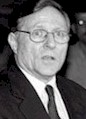 which includes the Oil For Food Program. At the time he was a
36-year veteran of the UN, but resigned from his post after 17
months because he could not continue to oversee a program that was
leading to enormous suffering of the people and causes 5,000
unnecessary child deaths each month due to lack of food, medicines
and medical equipment. Mr. Von Sponeck was in Iraq when the
Honorable Minister Louis Farrakhan and his Peace Mission to the
Middle East and Africa delegation were there, and in fact had the
opportunity to meet with some of the delegation. Recently, Mr. Von
Sponeck was in Chicago at the invitation of the Voices in the
Wilderness organization. While in Chicago, he spoke with Final Call
Editor James Muhammad.
which includes the Oil For Food Program. At the time he was a
36-year veteran of the UN, but resigned from his post after 17
months because he could not continue to oversee a program that was
leading to enormous suffering of the people and causes 5,000
unnecessary child deaths each month due to lack of food, medicines
and medical equipment. Mr. Von Sponeck was in Iraq when the
Honorable Minister Louis Farrakhan and his Peace Mission to the
Middle East and Africa delegation were there, and in fact had the
opportunity to meet with some of the delegation. Recently, Mr. Von
Sponeck was in Chicago at the invitation of the Voices in the
Wilderness organization. While in Chicago, he spoke with Final Call
Editor James Muhammad.
FCN: Do you think the American public is given a
fair view of what�s really going on in Iraq right now?
HVS: I�m absolutely flabbergasted � about the
disconnect between what I hear from people to whom I speak in formal
meetings as well as on the street. I cannot understand why in a
democracy there�s so little linkup between the public conscience,
the public perception, the public sense of honesty and integrity,
and the Washington attempt to disinform. Why is there not more
impact of that public conscience on decision making in Washington?
FCN: How is the Iraq issue portrayed differently in
other European countries?
HVS: I don�t want to give the impression that
everything is fine in Europe and everything is wrong in America. But
the art of disinformation is at a higher level of achievement in the
United States than in Europe. In the case of Iraq, there�s a
tremendous attempt to give a picture of demonization, to portray
Iraq as if Iraq consisted of not 23 million normal Iraqis, but of 23
million Saddam Husseins. It�s totally wrong, and I think even Saddam
Hussein as a dictator is completely wrongly portrayed in the media.
There is the most systematic effort to misinform that I�ve ever seen
in my lifetime in relations to the way the (U.S.) government and
main media � consistently wrongly portray this dictatorship that
none of us want. It�s one thing to have a dictator; it�s another
thing to use illegal means to react to that dictator.
FCN: How does this art of deception by media exist
here, but not exist in Germany or other countries?
HVS: The key word here is a three letter word:
O-I-L. America is very anxious to insure it retains a handle on this
important source of energy and is willing to do anything to make
sure that this remains. The immediate justification is the removal
of a dictator, the liberation of a people. But 12 years of
punishment of a people (through sanctions) doesn�t give me the
confidence that this is the true motive for approaching Iraq as a
country in conflict.
FCN: You lived in Iraq for more than a year. How do
the people really view Saddam Hussein?
HVS: It�s a mixed bag. There�s some total
support � you have others who are quite clear in very cautious ways
to tell you they would like to see a regime change. The range of
opinion is wide.
FCN: What impact has the no fly zone had on
conditions in Iraq?
HVS: It is a very wrong statement that you keep
reading in the press that says the no fly zones have any legal
basis. There�s no mandate from the United Nations. It is willfully
installed by the British and American governments. The official
intentions for having these zones may be good intentions�trying to
protect minorities, the Shias in the South and the Kurds in the
North�but I believe that today, the behavior of these two air forces
in Iraqi skies has not only to do with that, but definitely
something to do with the destabilization of Iraq. In addition, every
week you have civilian casualties as a result of attacks by these
air forces on � civilian installations, allegedly in self-defense.
FCN: How honest of a participant has the UN been in
this situation?
HVS: The UN has many faces. There�s a UN
Secretariat, and I think there are 800 international staff serving
Iraq to try to implement the Oil for Food Program and other
development type programs. I think those people are very honest and
trying their best under immensely difficult circumstances. That�s
very different from the United Nations, presently the UN Security
Council. The Security Council is today, unfortunately, totally
bilateralized. It�s in the hands of the U.S. government. The dream
of (Senator) Jesse Helms has come true, which is the UN as an
instrument of international conflict resolution has been
marginalized. � It�s become an instrument of maintaining that which
is in the interest of the superpower that we have today in the
world, and that�s the United States.
FCN: You�ve mentioned that sanctions are normally
used to bring nations and leaders back into proper behavior, and
you�ve questioned whether these sanctions are doing that. Is there a
need for that, has Saddam Hussein been acting out of normal behavior
where sanctions would be necessary?
HVS: No doubt in 1990 when Saddam Hussein
decided to invade Kuwait, he was out of order. � But when Iraq
withdrew its forces, it had fulfilled the demands of the initial UN
resolution. The tragedy is that over the years, the goal posts
continuously changed and Iraq remained in the grip, whatever it did
of the UN Security Council. New resolutions were imposed and the
price for these goal post changes are paid by whom�by the people of
Iraq, by the civilian people. What didn�t happen, which people
thought could happen � that economic pressure on the Iraqi people
would lead like on a conveyor belt to political change. There hasn�t
been any political change. The same government is there and it�s
more stable than most other governments around the world. But the
people have been punished for the last 12 long years because of that
kind of approach.
FCN: What�s going on right now in Iraq with regard
to the international community�s demands? Are observers there?
HVS: You have a very large team of UN people who
are helping to implement UN programs including the Oil for Food
Program. You also have an increasingly large number of embassies.
All the Arab countries have ambassadors or senior diplomats there
except for Saudi Arabia and Kuwait. But even Saudi Arabia started
mending fences � so you have a totally different political landscape
in the Middle East as far as Iraq is concerned. Isn�t that a great
basis to find a solution to the Iraq conflict other than military
confrontation?
FCN: The Arab League, even Kuwait, has said lift the
economic sanctions. If Kuwait is all right with that, then whose
interests do the sanctions serve?
HVS: Iraq must realize that it has to cooperate
more than it has in allowing the return of the arms inspectors,
particularly if, as Iraq argues, it has nothing to hide. But the
public doesn�t fully realize that Iraq�s opposition to the return of
arms inspectors isn�t because they don�t want them to come back, but
mainly because Iraq feels this is one part of a wider package of
measures that have to be agreed upon before they will agree to the
return of these arms inspectors. One important aspect with them (is)
that they must have a guarantee that the United Nations arms
inspectors will not yet again be misused for intelligence and spying
purposes. The other thing is they want a time frame, to make sure
this is not an open-ended, year after year inspection regime. Third,
they want to agree with the return of the arms inspectors in
exchange for the lifting of economic sanctions.
FCN: Is this merely a Bush vendetta, or is it more
than that?
HVS: I�m sure the family feud thing is an
element in this. Is it the decisive element? I don�t think so. It is
no secret anymore that the American presence in the Middle East is
on notice. Saudi Arabia doesn�t want American troops anymore; it has
become a public issue. Other governments are uneasy about it. The
smaller, weaker ones like Bahrain and Qatar are giving in under U.S.
pressure, but if they had a choice, they also want (America out). So
one could say that America is increasingly under pressure to
withdraw from that area. I think that is to (the U.S.) an
encouragement to make sure that they keep a handle on these sources
of energy by getting into Iraq. That�s the frightening part�that
this is all ultimately about a word with three letters, and that�s
oil.
FCN: Today�s paper had a long article about the
strained relations between the U.S. and European nations because of
the U.S. unilateralist view. Where is this all headed?
HVS: With the present approach, America will
painfully realize that the world isn�t as simplistic in its approach
as Washington wants it to be. (Countries) are extremely wary of
seeing a government in Washington that continually says "no" to
good, multilateral exercises. All the recent efforts to create a
better multilateral framework for our life in the 21st century has
been rejected and sometimes it�s breathtaking to see the rejection
come in such areas as the Convention on the Elimination of All Forms
of Discrimination Against Women, or the Convention on the Rights of
the Child, or the Biological Weapons Agreement, or the Land Mine
Agreement � wherever you look there is a "no" from the U.S. Then you
get into such difficult areas as the relationship with the Middle
East and you see a lack of leadership. � I see a very rocky road
ahead for the two continents.
FCN: Raising issues that question what the
government is doing in the current climate, as Min. Farrakhan has
raised, is viewed as unpatriotic. What do you think about the fact
that if people raise their voices, that they�re viewed as maybe
unpatriotic?
HVS: This is the first step of muzzling a
democracy. If you start doing that, you are attacking the very
substance, the fiber of a country that was created in order to give
people a new hope in life�escaping from dictatorships and ruthless
regimes that we had in Europe.
FCN: Why haven�t the other voices internationally
had an impact on U.S. and British behavior in Iraq?
HVS: One reason is the U.S. is an important ally
to European countries and it must take a lot before they are willing
to question that relationship. But the extremism that is now coming
out of Washington is facilitating that.
FCN: You were in Baghdad when Minister Farrakhan was
there. How did Iraqis respond to what he said?
HVS: He was welcomed as a person who came with a
sense of sympathy, of wanting to understand firsthand the conditions
in Iraq. I think the Iraqi public, the few that I talked to, were
impressed by an American delegation that came that wanted to update
their knowledge and become honest interpreters of the reality in
Iraq back home. That was what was very much appreciated. He�s known
there; therefore, he had a warm welcome. That also means that the
people were open to try to convey how they felt about the conditions
in Iraq and the forthcoming possibility of an attack against Iraq.
FCN: Any closing comments?
HVS: I�m convinced that in the history books,
the time that now is behind us, the time that the Iraqis since 1990
have suffered, will be identified as a horrendous mistake. The
tragedy is that awareness and recognition of this mistake will not
bring back thousands of people who have died as a result of wrong
policy. Lawlessness of one kind in Iraq is no free ticket for
lawlessness of another kind. What we have done internationally under
U.S. leadership is systematic violation of the very laws that your
earlier governments and others have created in order to protect
individuals. It should worry us that we�re entering now into an era
where it seems that international law is no more relevant.
FCN: Thank you.



