The Final Call |
Sister Space
Cigarettes and another reminder of their deadly consequences
By Shawntell Muhammad | Last updated: Jan 29, 2013 - 1:32:53 PMWhat's your opinion on this article?

|
The Center for Disease Control and Prevention reports, “Each year, an estimated 443,000 people die prematurely from smoking or exposure to secondhand smoke, and another 8.6 million live with a serious illness caused by smoking. Despite these risks, approximately 46.6 million U.S. adults smoke cigarettes. Smokeless tobacco, cigars, and pipes also have deadly consequences, including lung, larynx, esophageal, and oral cancers.
“The harmful effects of smoking do not end with the smoker. An estimated 88 million nonsmoking Americans, including 54 percent of children aged 3–11 years, are exposed to secondhand smoke. Even brief exposure can be dangerous because nonsmokers inhale many of the same poisons in cigarette smoke as smokers. disease and lung cancer in nonsmoking adults and sudden infant death syndrome, acute respiratory infections, ear problems, and more frequent and severe asthma attacks in children. Each year, primarily because of exposure to secondhand smoke, an estimated 3,000 nonsmoking Americans die of lung cancer, more than 46,000 die of heart disease, and about 150,000–300,000 children younger than 18 months have lower respiratory tract infections.”
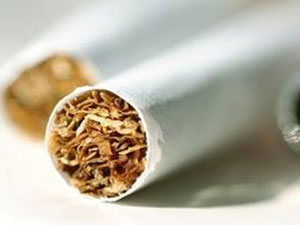
|
What is it about tobacco that makes it hard to give up? The answer is nicotine. Nicotine is addictive and reaches the brain in six seconds.
Nicotine is a drug that naturally occurs in tobacco. When you puff on a cigarette, you inhale nicotine in the smoke and it then spreads through the body. Nicotine interferes with communication between nerve cells. The result is a relaxing, pleasant feeling that makes you want to smoke more.
As you continue to smoke, your body adapts and becomes tolerant of nicotine. You have to smoke more cigarettes in order to achieve the same pleasant feeling. Because your body metabolizes nicotine quickly, the level of nicotine in your blood drops within a couple of hours and you find yourself needing to smoke repeatedly throughout the day to refresh the drug’s effect.
In How to Eat to Live, The Hon. Elijah Muhammad says, “If you want to live, stop smoking and chewing the poisonous weed (tobacco). Some of us are foolish enough to refer to our parents who chewed it and were 75 or 80 years old. That does not mean it was not harming them. Any medical scientist will tell you that the tobacco weed is a very poisonous weed. The poison it contains is called nicotine. The full extent of the poisonous nicotine has not yet been known to scientists. Nicotine produces a tar-like substance wherever it is used, on the lips, fingers, and in the mouth all the way down to the lungs. Manufacturers are trying to put something like a filter on cigarettes that will keep the nicotine from going into your mouth, but this will not prevent you from getting some of it into your body. Tobacco is a weed that should not be used.”
Smoking has been implicated in both male and female infertility. There are over 4,000 chemicals that are inhaled in one puff of a cigarette. These chemicals are totally foreign to the body. Heavy metals such as Cadmium are present in cigarette smoke and have been linked over and over again to low sperm quality. These toxic heavy metals have also been found in the follicular fluid that the eggs are growing in and have been implicated in female infertility. Again in How to Eat to Live, the Hon. Elijah Muhammad warned against tobacco use, “Tobacco and alcoholic beverages also affect the organs of reproduction of young men. You should never use tobacco, whiskey, beer or wine. They ruin the reproductive organs and waste away the man power. Tobacco and alcoholic beverages also have this destructive effect upon the reproductive organs of women.”
The United States Surgeon General Dr. Regina Benjamin teamed up with Health and Human Services Secretary Kathleen Sebelius and assistant secretary Dr. Howard Koh and put together a comprehensive 700 page report on the damaging effects of smoking and secondhand smoke exposure on the body. The report, “How Tobacco Smoke Causes Disease: The Biology and Behavioral Basis for Smoking-Attributable Diseases,” can be read at www.medpagetoday.com.
Sebelius and Koh stressed that there is absolutely no “safe” level of cigarette smoke exposure. Even one cigarette causes real biologic changes in the body.
“We didn’t know the fact that when you inhale one cigarette, it affects the lining of blood vessels,” Sebelius said. “One cigarette, or the exposure to secondhand smoke may cause a heart attack. We didn’t know that, and we didn’t know how that happened.”
Secondhand smoke is just as dangerous as smoking. There are no safe levels of exposure. Children’s bodies are still developing, and exposure to the poisons in secondhand smoke puts them at risk of severe respiratory diseases and can hinder the growth of their lungs. Secondhand smoke is a known cause of low birth weight, Sudden Infant Death Syndrome (SIDS), asthma, bronchitis, pneumonia, middle ear infection, and other diseases.
Some of the toxins contained in secondhand smoke are: arsenic, benzene, beryllium, cadmium, chromium, ethylene oxide, nickel, polonium-210, vinyl chloride. Tactics such as using air cleaners, airing out buildings, and creating separate smoking and non-smoking sections do not prevent non-smokers’ exposure to secondhand smoke.
According to the American Cancer Society, the only way non-smokers can be completely protected from secondhand smoke indoors is to ban all indoor smoking.
Third-hand smoke is generally considered to be residual nicotine and other chemicals left on a variety of indoor surfaces by tobacco smoke. This residue is thought to react with common indoor pollutants to create a toxic mix. This toxic mix of third-hand smoke contains cancer-causing substances, posing a potential health hazard to nonsmokers who are exposed to it, especially children.
Third-hand smoke residue builds up on surfaces over time and resists normal cleaning. Third-hand smoke can’t be eliminated by airing out rooms, opening windows, using fans or air conditioners, or confining smoking to only certain areas of a home. Third-hand smoke remains long after smoking has stopped.
(Shawntell Muhammad operates Organic Nourishment which includes holistic grocery shopping tours and nutritional guidance. For more information, e-mail [email protected].)

News Search
Loading
Follow The FinalCall.com Networks



Join The FinalCall.com e-List


 Click Here Stay Connected!


For Email Marketing you can trust
Farrakhan Articles
- Finding A Way Home
- The Importance Of Early STEM Exposure
- You Can Change the World with Your Womb
- Questions for my brothers
- Don’t Depend On An ‘Amber Alert’ To Save Black Girls
- Mentoring group impacts an entire city!
- Security Council urged to keep commitments to women
- Muslim publisher assembles panel on domestic violence, sexual abuse and stalking
- Queen Aminah debuts during D.C. Fashion Week
- Ending violence against women – A global responsibility
INSIDE STORIES AND REVIEWS
-

-

About Harriett ... and the Negro Hollywood Road Show
By Rabiah Muhammad, Guest Columnist » Full Story -

Skepticism greets Jay-Z, NFL talk of inspiring change
By Bryan 18X Crawford and Richard B. Muhammad The Final Call Newspaper @TheFinalCall » Full Story -

The painful problem of Black girls and suicide
By Charlene Muhammad -National Correspondent- » Full Story -

-

-

-

Exploitation of Innocence - Report: Perceptions, policies hurting Black girls
By Charlene Muhammad -National Correspondent- » Full Story -

Big Ballin: Big ideas fuel a father’s Big Baller Brand and brash business sense
By Bryan Crawford -Contributing Writer- » Full Story -
