The Final Call |
World News
Sudanese rebels prepare for war
By William Lloyd George | Last updated: May 10, 2013 - 12:49:53 PMWhat's your opinion on this article?
|
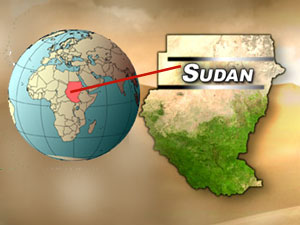
Rebel activity had previously been restricted to southern and eastern Sudan. But the April 27 attack by the Sudan Revolutionary Front (SRF) in North Kordofan, which is about 300 miles from Sudan’s capital Khartoum, was the first full-on offensive to be launched in central Sudan.
“Now we are fighting under one command, and we have one unified political leadership,” Mr. Arman, the secretary general of the Sudan People’s Liberation Front-North (SPLM-N), said in an interview at a hotel in neighboring Ethiopia’s capital Addis Ababa.
The SRF is made up of insurgent groups from Sudan’s western region of Darfur, including the Justice and Equality Movement (JEM) and the two main factions of the Sudan Liberation Movement. The SPLM-N, which is also part of the SRF, is from South Kordofan and Blue Nile states, in south Sudan.
Previously, the groups had fought relatively independently, with the Darfuri rebels’ desire for an Islamist state being a main obstacle to forming an alliance. When the JEM gave in to the SPLM-N’s offer to create a secular state in Sudan, once President Omar Al-Bashir is deposed, the alliance was formed in November 2011, and it has seemingly grown in strength ever since.
The SRF’s core aims are for the formation of a new transitional government of national unity, the end to the marginalization of the peripheries, and the installation of a decentralized federal system based on a secular constitution. They have also stressed the need for land rights and support for pastoralists.
On Jan. 5, the SRF reached out to opposition parties and civil society groups, and signed a “New Dawn Charter” in Kampala, Uganda, which calls for an inclusive transition.

News Search
Loading
Follow The FinalCall.com Networks



Join The FinalCall.com e-List


 Click Here Stay Connected!


For Email Marketing you can trust
Farrakhan Articles
- Condemning Belgium’s King Leopold II and enslavement, murder of 10 million Congolese
- Police brutality in the U.S., its roots and some views from the Motherland
- The Motherland’s powerful influence on Islam
- Seattle, Sudan and unlikely similarities in autonomous zones, calls to end repression
- Motherland stands with Black America’s fight against rampant police violence
- Pandemic impacts Africa’s informal cross border trade
- Ethiopian rabbis win court victory in Israel, but struggle continues for Africans in the Zionist State
- The history of Cuba’s unprecedented humanitarian work in Africa
- Pandemic shaping economic, social climate of East and Southern Africa
- African women farm majority of Africa’s food but own less than majority of land
INSIDE STORIES AND REVIEWS
-

-

About Harriett ... and the Negro Hollywood Road Show
By Rabiah Muhammad, Guest Columnist » Full Story -

Skepticism greets Jay-Z, NFL talk of inspiring change
By Bryan 18X Crawford and Richard B. Muhammad The Final Call Newspaper @TheFinalCall » Full Story -

The painful problem of Black girls and suicide
By Charlene Muhammad -National Correspondent- » Full Story -

-

-

-

Exploitation of Innocence - Report: Perceptions, policies hurting Black girls
By Charlene Muhammad -National Correspondent- » Full Story -

Big Ballin: Big ideas fuel a father’s Big Baller Brand and brash business sense
By Bryan Crawford -Contributing Writer- » Full Story -
