The Final Call |
World News
Complications likely in U.S.-Iran relations
By Ali Gharib | Last updated: Jul 2, 2009 - 10:27:06 PMWhat's your opinion on this article?
WASHINGTON (IPS/GIN) - The results of the June 12 Iranian election, and the intentions that U.S. President Barack Obama's reserved responses conceal, remain uncertain. This alone is clear: Iran is at the threshold of an unknown period in its history.
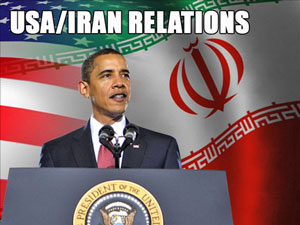
“Now, it's not productive, given the history of the U.S.-Iranian relations, to be seen as meddling—the U.S. president meddling in Iranian elections,” said Mr. Obama in a June 16 interview, alluding to the Central Intelligence Agency (CIA)-orchestrated coup that overthrew a secular democratically-elected government in favor of the authoritarian shah in 1953. |
Mr. Obama had hoped to engage the government of the winner on nuclear matters by the end of the year. He was reportedly planning to aim much of the diplomacy at Ayatollah Khamenei, who has final say on governmental matters, including foreign policy.
But the protracted wrangling over the election is likely to complicate any effort to meaningfully engage on the issue.
The continuing massive street protests in Iran, with numbers reportedly in the hundreds of thousands, and violence have made it difficult to predict where things are headed.
The Supreme Leader of Iran has said demands of Mr. Moussavi's supporters for another election or a run-off will not be met.
Mr. Khamenei's future as supreme leader is thought secure, but is also being questioned.
“People are already discussing who the next supreme leader will be,” said Hooman Majd, an Iranian-American journalist and author who just returned from an extended stay in Iran where he was covering the run-up to the elections.
The uncertainty ahead has caused paralysis in Washington, where officials are waiting to see how the disputes shake out.
Mr. Obama made cautious comments supporting Iranian democracy and spoke out against the violence used on apparently non-violent protestors by the government and its paramilitary supporters, but had not explicitly called the elections fraudulent or offered support to Mr. Moussavi and his followers.
Hawks and right-wing figures, who, even as they call for military strikes against Iran, purport to champion its dissidents and their concerns, called for Mr. Obama to speak out more forcefully in favor of the protesters reportedly killed and wounded during street protests and raids on student dormitories, according to Iranian human rights groups.
“Now, it's not productive, given the history of the U.S.-Iranian relations, to be seen as meddling—the U.S. president meddling in Iranian elections,” said Mr. Obama in a June 16 interview, alluding to the Central Intelligence Agency (CIA)-orchestrated coup that overthrew a secular democratically-elected government in favor of the authoritarian shah in 1953.
But the neoconservative editorial board of the Wall Street Journal reacted to Mr. Obama's comments with consternation, condemning him for his caution.
“Whatever the outcome” of the current election crisis, said Brookings Institution senior fellow Suzanne Maloney at a conference on the nuclear issue and Iranian elections, “This is a changed Islamic Republic.”
At Final Call press time, the Associated Press reported riot police attacked hundreds of demonstrators with tear gas and fired live bullets in the air to disperse a rally in central Tehran June 22, carrying out a threat by the country's most powerful security force to crush any further opposition protests over the disputed presidential election.
Iranian PressTV reported Iran's Foreign Ministry spokesman, Hassan Qashqavi, saying that some European countries and the U.S. have played a major role in provoking the post-election violence. Iran's military officials have also accused ‘terrorist elements' of infiltrating the rallies, causing further conflict and bloodshed.
Britain, specifically accused by Iran of fomenting post-election unrest, said it was evacuating the families of diplomats and other officials based in Iran.
Iran said at least 17 protesters have been killed in a week of unrest so far after the electoral council declared President Mahmoud Ahmadinejad the winner of the June 12 election. Severe restrictions on reporters have made it almost impossible to independently verify any reports on demonstrations, clashes and casualties. Iran has ordered reporters for foreign news agencies to stay in their offices, barring them from any reporting on the streets.
The country's highest electoral authority, the Guardian Council, acknowledged June 22 that there were voting irregularities in 50 electoral districts, the most serious official admission so far of problems in the election. But the council insisted the problems do not affect the outcome of the vote.
The elite Revolutionary Guard June 22 issued its sternest warning so far in the post-election crisis. It warned protesters to “be prepared for a resolution and revolutionary confrontation with the Guards, Basij and other security forces and disciplinary forces” if they continue their near-daily rallies.
Mr. Mousavi vowed to keep up the protests, in defiance of Supreme Leader Ayatollah Khamenei, who holds ultimate power in Iran.
“The country belongs to you,” Mr. Mousavi's statement said. “Protesting lies and fraud is your right.”
Mousavi ally and former president Mohammad Khatami said in a statement that “protest in a civil manner and avoiding disturbances in the definite right of the people and all must respect that.”
In the latest twist, a graphic video that appears to show a young woman dying within minutes after she was shot during June 20 demonstrations has become the iconic image seen by millions around the world on video-sharing sites such as YouTube. It has also become a rallying cry for protesters.
(The Associated Press and Final Call staff contributed to this report.)
Related links:
American intervention and Iran’s presidential election (FCN, 07-02-2009)

News Search
Loading
Follow The FinalCall.com Networks



Join The FinalCall.com e-List


 Click Here Stay Connected!


For Email Marketing you can trust
Farrakhan Articles
- Condemning Belgium’s King Leopold II and enslavement, murder of 10 million Congolese
- Police brutality in the U.S., its roots and some views from the Motherland
- The Motherland’s powerful influence on Islam
- Seattle, Sudan and unlikely similarities in autonomous zones, calls to end repression
- Motherland stands with Black America’s fight against rampant police violence
- Pandemic impacts Africa’s informal cross border trade
- Ethiopian rabbis win court victory in Israel, but struggle continues for Africans in the Zionist State
- The history of Cuba’s unprecedented humanitarian work in Africa
- Pandemic shaping economic, social climate of East and Southern Africa
- African women farm majority of Africa’s food but own less than majority of land
INSIDE STORIES AND REVIEWS
-

-

About Harriett ... and the Negro Hollywood Road Show
By Rabiah Muhammad, Guest Columnist » Full Story -

Skepticism greets Jay-Z, NFL talk of inspiring change
By Bryan 18X Crawford and Richard B. Muhammad The Final Call Newspaper @TheFinalCall » Full Story -

The painful problem of Black girls and suicide
By Charlene Muhammad -National Correspondent- » Full Story -

-

-

-

Exploitation of Innocence - Report: Perceptions, policies hurting Black girls
By Charlene Muhammad -National Correspondent- » Full Story -

Big Ballin: Big ideas fuel a father’s Big Baller Brand and brash business sense
By Bryan Crawford -Contributing Writer- » Full Story -
