The Final Call |
Perspectives
¿Quién Soy Yo? Who Am I? (Pt. 2)
By Tony Muhammad -Guest Columnist- | Last updated: Jan 31, 2012 - 9:37:04 AMWhat's your opinion on this article?
Healing through answering an essential question —Part 2
- ¿Quién Soy Yo? Who Am I? (Part 1)
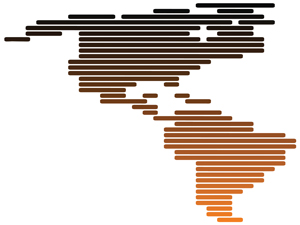
'Many Latin Americans are indeed, through miscegenation, genetically mixed with the Spanish. But to emphasize the Spanish blood and negate the Indigenous and/or African blood that runs through our veins is to negate our true and complete self. To accept this term at face value is like automatically accepting a bastard-like status in relation to the Spanish/European that we senselessly adore.' |
A person’s identity is the extent to which that person is being his/her own self. A person’s identity should be reflected in his/her own name.
The Honorable Elijah Muhammad further states, “All nations on the earth are recognized by the name by which they are called. By stating one’s name, one is able to associate an entire order of a particular civilization simply by name alone.”
Based on these standards, the people that are identified as “Latin American,” by and large, have not known themselves and hence, been themselves in over 400-500 years.
Let’s put this to the test. We begin with the two terms used generally to identify Latin American people, “Hispanic” and “Latino.” The term “Hispanic,” which first appeared in the U.S. Census in 1970, has colonial connotations. It derives from the renaming of the island of Ayiti (today Haiti and The Dominican Republic) to “Hispaniola” in 1492 by Christopher Columbus conquering under the Spanish flag. Today to identify as “Hispanic,” as many from the Spanish-speaking islands do (particularly Cubans), is in essence to view oneself as occupying an inferior status in relation to those originally from Spain, “La Madre Patria,” the Mother Country. However, the truth of the matter is that many of our ancestors from the region never knew of such a Madre Patria.
Many Latin Americans are indeed, through miscegenation, genetically mixed with the Spanish. But to emphasize the Spanish blood and negate the Indigenous and/or African blood that runs through our veins is to negate our true and complete self. To accept this term at face value is like automatically accepting a bastard-like status in relation to the Spanish/European that we senselessly adore.
The term “Latino,” while it is preferred to be used by more progressive-minded people, etymologically it is also a misnomer. Its original use had nothing to do with the Spanish (and Portuguese) speaking people of the Western Hemisphere. It derives from a 13th and 14th century movement among Romance (or Latin influenced) language speaking scholars (primarily from Italy, France and Spain) in efforts to build unity among themselves. A person that speaks Spanish cannot even logically justify calling himself/herself “Latino” just based on being able to speak Spanish as much of the language itself derives from Arabic due to approximately 800 years of Moorish control of the Iberian Peninsula. According to some scholars, over 4,000 words in the Spanish language derive from Arabic.
Many of us of Latin American ancestry do not even know the meaning of our Spanish surnames, yet we walk around carrying them as if that were normal. In traditional non-Western cultures parents name their children according to the divine attributes that they seek for them to cultivate as they progress in life. If we analyze the original names of the islands and nations of Native American and African people prior to the coming of the Spanish, we will find that in root many of them have Divine meaning and speak to the Greatness that we once had and can potentially exercise after we realize who we truly are. For instance, Borikén or Borinquen, which is the original name for Puerto Rico, in Taíno means “Land of the Valiant Lord;” Cuba, also in Taíno means “Great Place;” the island once known as Hairoun (today the island nation of St. Vincent) according to the Kalinago means “Land of the Blessed.” The name Inca means “Son of the Sun;”
Likewise in West Africa, Yoruba, according to certain scholars means “We are Friends (or Family),” the name Ghana means “Great Ruler.”
Today many Mexican Americans refuse to be called “Mexican” and would rather be called Chicano which means “Child of the Land” in the Nahuatl language.
Both the Honorable Elijah Muhammad and the Honorable Minister Louis Farrakhan have taught us to research and study our great histories of the past so that we can confirm and verify our once held Greatness, not try to become those exact same people again, but to begin to value those Great aspects of ourselves encoded in our genetic makeup that we have been denying for far too long. In becoming reacquainted with the True Self, we now begin to develop greater vision for ourselves, our families and our communalities not in the image, likeness and desires of someone else that has historically put us down for who we are, what we look like and where we come from.
With that vision we now start planning a greater future where we can see ourselves with greater depth and produce a better world more in tune with our very nature and in harmony with the Thinking of God.
(Tony Muhammad, who teaches Social Studies in Miami-Dade County Public Schools, is involved in The MIA (Music Is Alive) Campaign for development of the National Hip Hop Day of Service, a former publisher of Urban America newspaper and co-organizer of the Organic Hip Hop Conference. He is also a student assistant minister at Muhammad Mosque No. 29 in Miami.)
Read Part 1 of this column @ ¿Quién Soy Yo? Who Am I? (Part 1)

News Search
Loading
Follow The FinalCall.com Networks



Join The FinalCall.com e-List


 Click Here Stay Connected!


For Email Marketing you can trust
Farrakhan Articles
- 'What to the Slave Is the Fourth of July?'
- A loss for the enemy, a victory for the truth
- Cops and police unions strike back
- Minister Farrakhan, Chelsea Handler & The Appeal of Truth
- Hope for change isn’t change: Don’t be confused
- The unraveling of soulless America
- Ramadan: Building the Character and Will of God Within
- ‘Hey, Didn't Y’all Kill Malcolm?’
- Stop excluding people of color in environmental policies
- RAMADAN the Month in which the Qur’an was Revealed, a Guidance to Humanity
INSIDE STORIES AND REVIEWS
-

-

About Harriett ... and the Negro Hollywood Road Show
By Rabiah Muhammad, Guest Columnist » Full Story -

Skepticism greets Jay-Z, NFL talk of inspiring change
By Bryan 18X Crawford and Richard B. Muhammad The Final Call Newspaper @TheFinalCall » Full Story -

The painful problem of Black girls and suicide
By Charlene Muhammad -National Correspondent- » Full Story -

-

-

-

Exploitation of Innocence - Report: Perceptions, policies hurting Black girls
By Charlene Muhammad -National Correspondent- » Full Story -

Big Ballin: Big ideas fuel a father’s Big Baller Brand and brash business sense
By Bryan Crawford -Contributing Writer- » Full Story -
