The Final Call |
National News
Up in smoke: Targeted marijuana arrests are having lingering impact on Blacks and costing states billions
By Nisa Islam Muhammad -Staff Writer- | Last updated: Jun 17, 2013 - 10:39:13 AMWhat's your opinion on this article?
“The War on Drugs, policing, criminalization and mass incarceration have become substitutes for social, economic and racial justice in America’s dark ghettos. The damages to our communities have been devastating … and it must end.” —Dr. Ron Daniels |
“They told me they had to let me go because I didn’t pass the background check. I had been arrested and convicted for drug possession. I tried to explain that it was nothing major, that it was years ago, that I was a changed man and that I really needed this job to feed my four children,” he told The Final Call.
“I could hardly stand there and listen. I was breaking inside. It took all I could do not to go off and tear the place up. Why was this petty stuff still following me? I can’t go to school and get financial aid and now I can’t get a job. What am I supposed to do?”
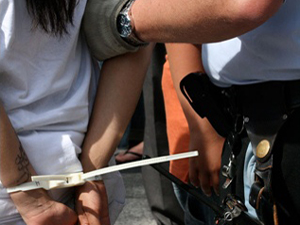
Mr. Harrison is one of millions of young Black men whose lives have been devastated because of drug arrests. They are not drug kingpins, don’t bring drugs into the country, nor do they run mass networks of drug sales. Many times the drugs possessed are for recreational use.
New research shows Black people are 3.7 times more likely to be arrested for marijuana possession than Whites despite comparable usage rates, according to a report released June 4 by the American Civil Liberties Union.
The report also found marijuana arrests make up nearly half of all drug arrests, with police making over 7 million marijuana possession arrests between 2001 and 2010. “The War on Marijuana in Black and White: Billions of Dollars Wasted on Racially Biased Arrests” is the first-ever report to examine nationwide state and county marijuana arrest data by race, according to the ACLU.
“The war on marijuana has disproportionately been a war on people of color,” said Ezekiel Edwards, director of the ACLU Criminal Law Reform Project and one of the primary authors of the report.
“State and local governments have aggressively enforced marijuana laws selectively against Black people and communities, needlessly ensnaring hundreds of thousands of people in the criminal justice system at tremendous human and financial cost,” he said.
The report findings show while there were pronounced racial disparities in marijuana arrests 10 years ago, they have grown significantly worse. In counties with the worst disparities, Blacks were as much as 30 times more likely to be arrested.
The racial disparities exist in all regions of the U.S., as well as in both large and small counties, cities and rural areas, and in both high- and low-income communities. Disparities are also consistently high whether Blacks make up a small or a large percentage of a county’s overall population.
“As I have said so many times, the War on Drugs, policing, criminalization and mass incarceration have become substitutes for social, economic and racial justice in America’s dark ghettos. The damages to our communities have been devastating … and it must end,” said Dr. Ron Daniels, president of the Institute of the Black World.
The institute is planning a June 17 Day of Action to counter this racial profiling.
“We call on the invisible, voiceless victims of the ‘New Jim Crow’—jobless Black youth, formerly incarcerated persons and family members who have lost love ones to the fratricide in America’s ‘dark ghettos’ to become ‘drum majors for Justice’ demanding that President Obama have the audacity to declare the ‘State of Emergency’ in Black America a moral and political crisis which requires an end to the War on Drugs and massive, direct investment to heal urban inner-city neighborhoods,” the institute declares on its website.
Despite the fact that a majority of Americans now support marijuana legalization, states spent an estimated $3.61 billion enforcing marijuana possession laws in 2010 alone.
New York and California combined spent over $1 billion. Though many police departments across the country have made enforcement a priority for the past decade, the aggressive enforcement of marijuana laws has failed to eradicate or even diminish the use of marijuana.
“The aggressive policing of marijuana is time-consuming, costly, racially biased, and doesn’t work,” said Mr. Edwards. “These arrests have a significant detrimental impact on people’s lives, as well as on the communities in which they live. When people are arrested for possessing even tiny amounts of marijuana, they can be disqualified from public housing or student financial aid, lose or find it more difficult to obtain employment, lose custody of their child, or be deported.”
The report urges lawmakers and law enforcement to reform policing practices, including ending racial profiling as well as unconstitutional stops, frisks, and searches. It also recommends reforming state and federal funding streams and performance measures that can give incentives to police to make low-level drug arrests.

News Search
Loading
Follow The FinalCall.com Networks



Join The FinalCall.com e-List


 Click Here Stay Connected!


For Email Marketing you can trust
Farrakhan Articles
- Unmasking Mr. Dershowitz
- Activists charge environmental poisoning and ‘silent homicide’ in San Francisco
- President spews more incendiary rhetoric as election draws closer
- Covid-19 and the divine chastisement of Florida
- The National Guard was deployed in Atlanta, what does this mean as shootings, violence plague other American cities?
- Our babies are dying, where are our friends?
- Hurling truth at Falsehood Nation of Islam responds to lies of Atty. Alan Dershowitz
- The impact of a universal message
- Police traffic stops in nation’s capital disproportionately target Blacks
- A Call to Action’ to address Covid-19 in Black Chicago
INSIDE STORIES AND REVIEWS
-

-

About Harriett ... and the Negro Hollywood Road Show
By Rabiah Muhammad, Guest Columnist » Full Story -

Skepticism greets Jay-Z, NFL talk of inspiring change
By Bryan 18X Crawford and Richard B. Muhammad The Final Call Newspaper @TheFinalCall » Full Story -

The painful problem of Black girls and suicide
By Charlene Muhammad -National Correspondent- » Full Story -

-

-

-

Exploitation of Innocence - Report: Perceptions, policies hurting Black girls
By Charlene Muhammad -National Correspondent- » Full Story -

Big Ballin: Big ideas fuel a father’s Big Baller Brand and brash business sense
By Bryan Crawford -Contributing Writer- » Full Story -
